In the moments before the ground begins to shake, imagine receiving an alert that an earthquake is imminent, giving you precious seconds to take cover or halt potentially hazardous activities. This is a real-life feature of earthquake early warning (EEW) systems. These sophisticated networks are designed to detect the initial signs of an earthquake, evaluate its potential impact, and provide warnings to affected areas before the more destructive shaking starts.
The Basics of Earthquake Early Warning Systems
An EEW system relies on a network of seismometers strategically placed near fault lines and across regions prone to seismic activity. One such system, located in Oregon, has been in place for three years. The ShakeAlert system there is operated by the Pacific Northwest Seismic Network and the U.S. Geological Survey and has already proved effective within a region under the looming threat of a Cascadia Subduction Zone earthquake.
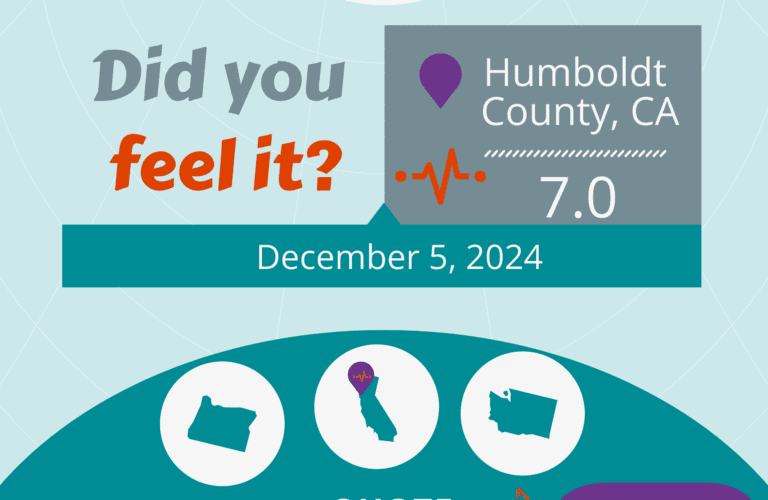
“The biggest one was in the Ferndale, Northern California area,” the program director said, referring to a large quake in December of 2022 near the Oregon/California border. “That was such a large earthquake, nearly magnitude 7, that folks in Brookings and Gold Beach and through the Medford area got upwards of 60 seconds of warning.”
Without getting too scientific, let’s try to answer the question, “How does it work?”
- These instruments are sensitive enough to detect an earthquake’s primary waves (P-waves), which are the initial, less destructive waves that travel faster than the secondary waves (S-waves) and surface waves that cause most of the shaking and damage.
- When a P-wave is detected, the system instantly analyzes the data, estimating the earthquake’s location, depth, and magnitude.
- This information calculates the expected intensity of shaking across different areas. It sends out alerts through various channels, such as mobile apps, text messages, and broadcast systems, all in a matter of seconds.
If you have your phone set up to receive ShakeAlert warnings, you might have a few extra moments to put a plan into action before the ground starts to move.
Benefits of Early Warnings
The primary and potentially lifesaving benefit of EEW systems is their lead time, even if it’s just a few seconds to tens of seconds. ShakeAlert systems can offer critical seconds of warning before we feel the impacts of an earthquake, allowing people to:
- Drop, Cover, and Hold On: Reducing the risk of injury from falling debris.
- Pause Surgeries and Delicate Medical Procedures: Minimizing potential complications.
- Stop Trains and Elevators: Preventing derailments and trapping people.
- Shutdown Utilities and Industrial Processes: Reducing the risk of fires, explosions, or chemical releases.
- Prepare Emergency Services: Giving responders a head start on mobilization.
Challenges Still Exist
Despite their potential, EEW systems have challenges. Their effectiveness depends on the density and quality of the seismic network, the speed of the communication infrastructure, and public education on responding to alerts. False alarms and missed warnings can undermine public trust in the system.
EEW systems represent a significant step forward in disaster preparedness and response. By providing critical lead time before the most severe shaking begins, these systems can save lives, reduce injuries, and minimize economic losses. As technology advances and public awareness grows, the global expansion and refinement of earthquake early warning systems hold great promise for communities around the world vulnerable to seismic hazards.
Start preparing
Secure your standalone Earthquake insurance policy today. If you have questions about how this coverage works, reach out to your insurance agent or visit Quake Insurance by GeoVera .